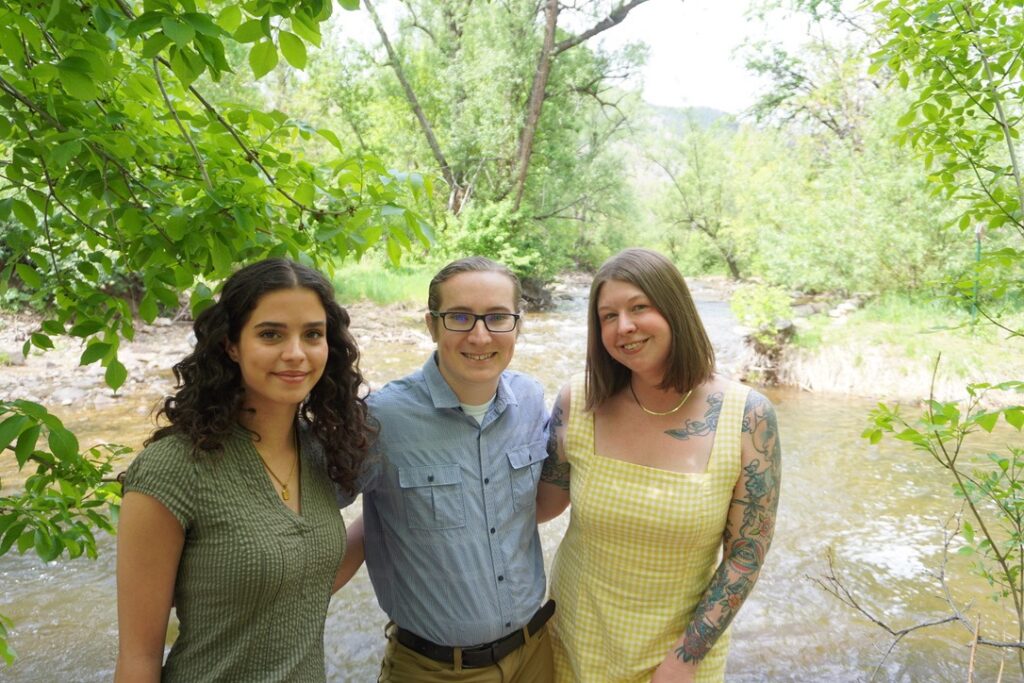
Meet the MENV Team: Graduate Consultants Working to Restore Colorado’s Urban Waterways
Hello! We are a team of graduate students from the Masters of the Environment (MENV) program at the University of Colorado Boulder, and we’re excited to be partnering with Colorado Water Trust on a 9-month capstone project focused on urban stream flow restoration. This summer, we’ll be speaking with communities across Colorado to explore how people interact with, value, and manage the urban waterways flowing through their towns and cities. As Colorado’s population grows and the impacts of climate change intensify, understanding the role these streams play in our daily lives is more important than ever.
To kick off this initiative, Colorado Water Trust published a blog post titled, Restoring Flows in Urban Colorado: A New Frontier for Colorado Water Trust?. This post introduces the goals of the project and highlights the importance of exploring streamflow restoration in Colorado’s cities and towns. If you’re new to this work, we recommend starting there to learn more about why Colorado Water Trust is trying to learn more about urban waterways and what this partnership aims to achieve.
Our work supports Colorado Water Trust’s mission to restore flows to Colorado’s rivers and streams, by focusing on understanding the diverse needs and values of urban communities. By gathering local knowledge and building a clearer picture of how people relate to the water in their environments, we aim to help Colorado Water into more populated areas while centering equity and inclusion.
What Is the MENV Program? A Graduate Experience Built for Real-World Sustainability Work
Offered through CU Boulder, the Masters of the Environment program is a professional graduate degree focused on preparing students to address complex sustainability issues through interdisciplinary coursework and applied, partner-based projects.
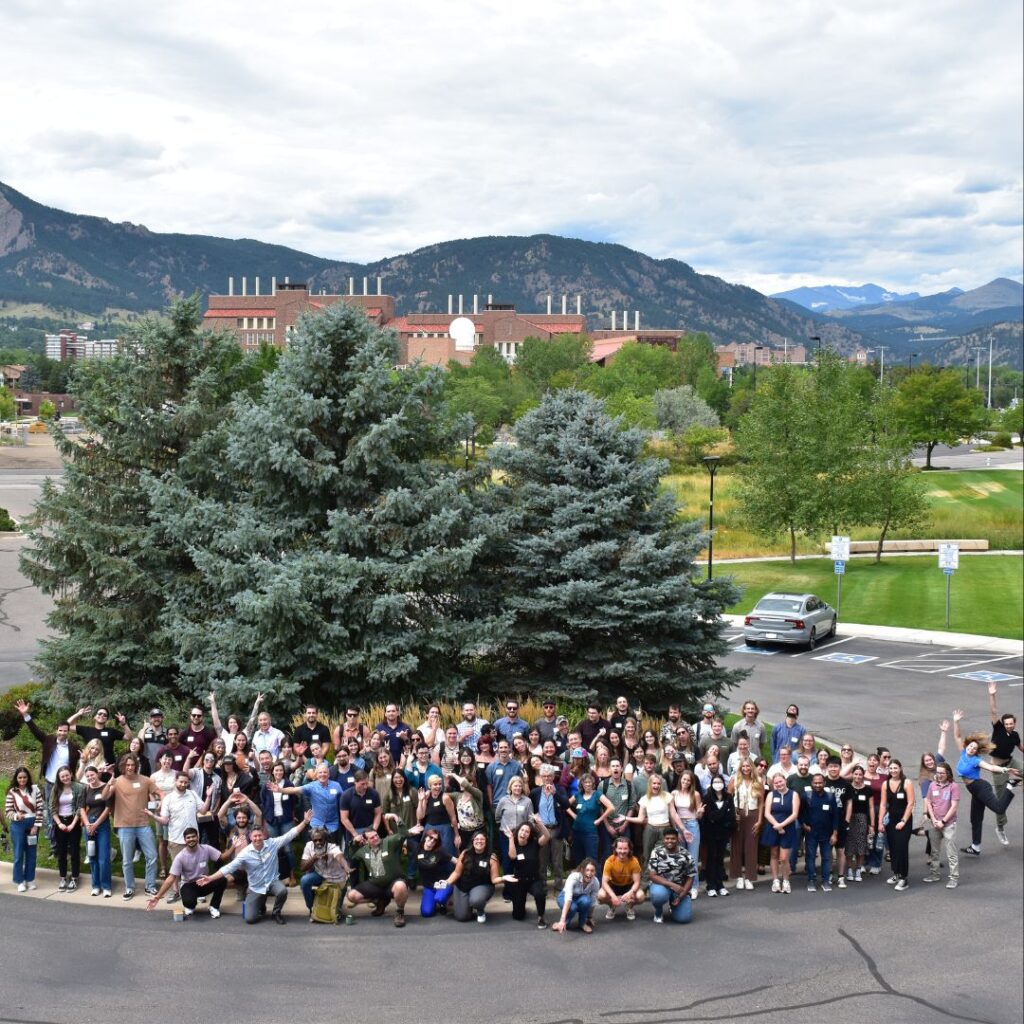
A Closer Look at the MENV Program at CU Boulder
The Master of the Environment (MENV) program at CU Boulder is a 21-month professional graduate program that combines academic coursework with applied sustainability work. Students specialize in one of five areas: Environmental and Natural Resources Policy (ERNP), Renewable and Sustainable Energy (RSE), Sustainability in the Outdoor Industry (SOI), Sustainable Food Systems (SFS), and Urban Resilience and Sustainability (URS).
A defining feature of the program is the Capstone project, where students partner with organizations to address real sustainability challenges. Our team’s project with Colorado Water Trust is part of this effort.
While the program emphasizes technical skills and policy knowledge, it also challenges us to think about the broader social and environmental context of our work. We’re learning how to approach complex issues with a systems perspective, and how to collaborate across sectors, communities, and disciplines. That mindset is central to our Capstone project—and to the kind of work we hope to do after graduation.
Equity is not just a theme we study in the MENV program—it’s a lens we apply to our projects, discussions, and professional development as MENV students. We’ve come to understand that environmental issues don’t impact all communities equally—and that to lead effectively, we must acknowledge and address those disparities.
In Colorado and across the country, equitable access to safe greenspaces and clean waterways remains a challenge—especially for BIPOC (Black, Indigenous, and People of Color) and low-income communities. This disparity, often referred to as the “Nature Gap“, highlights how environmental benefits are not distributed evenly. According to Water Education Colorado, groups such as Acequia stakeholders, Colorado Ute Tribes, and BIPOC communities involved in urban agriculture have been disproportionately impacted and historically excluded from water planning and decision-making processes. But the good news is that since 2023, the State of Colorado and the Colorado Water Conservation Board (CWCB) have taken steps to incorporate equity, diversity, and inclusion (EDI) into future water planning efforts. As students, applying this lens to our capstone project is not only essential to any work completed, but we hope one that will have ripple effects in creating a more inclusive place to live and play.
As we dive into conversations with communities across the state, we’re carrying a deep awareness that history, policy, and privilege shape who gets a seat at the table when it comes to water decisions. That’s why we’re committed to asking better questions and doing more listening. Who has been left out of water planning in the past? What does meaningful engagement look like? And how can our work support a future where clean, flowing waterways are truly shared spaces—places that nourish all communities, not just a few?
Where Learning Meets Action: Real Projects, Real Impact
The most hands-on piece of the MENV program is the —a 9-month project where students partner with organizations to solve real sustainability challenges. Capstone projects kick off in the second year of the program and run from January through October – but project development and student matching begin earlier to ensure projects are well-scoped, sustainability focused, and mutually beneficial to students and community partners.
Each fall, potential partners submit project proposals to be reviewed by MENV faculty and staff. Students then have the opportunity to learn about the proposals, meet with the organizations, and identify which projects align best with their educational goals. From there, faculty advisors match students to projects based on their interests, skills, and career goals. Past Capstones have involved work in water resource management, climate adaptation planning, energy transitions, environmental policy, and sustainable business strategy.
Our current project with Colorado Water Trust is an example of this process in action. As a student team, we’re researching how urban communities in Colorado interact with their local waterways—work that will directly support the Trust’s efforts to investigate local interest in and opportunities for potential streamflow restoration projects in populated areas.
By the time we graduate, each of us will have contributed to a partner-driven, applied project that demonstrates both our technical knowledge and our ability to work collaboratively on complex sustainability issues.
We are incredibly excited to work with Colorado Water Trust on this project and are looking forward to connecting with people across the Colorado water industry. Engaging with water professionals, local communities, and nonprofit organizations alike presents the perfect opportunity to have meaningful conversations on the various ways in which these parties interact with water, particularly in urban settings. We will gain in-depth knowledge of the intricacies surrounding the Colorado water industry that we couldn’t get elsewhere. The opportunity to speak with community leaders and nonprofit organizations on their communities’ needs will be invaluable in addressing current gaps. Most importantly, this project moves us towards protecting our urban waterways, which are vital to every community.
Currently, we’re diving into the second phase of our project. Our team is actively working on a literature review to better understand how people, cities, and organizations relate to urban waterways—both in Colorado and beyond. This research is helping us design a survey for water users, which we’ll distribute to residents, city staff, nonprofits, and businesses throughout the state. At the same time, we’re compiling a list of potential interviewees—people who can share deeper insight into how their communities engage with streams and rivers. These interviews will help us build a more complete understanding of the ecological and recreational roles that urban waterways play.
Meet the MENV Capstone Team Partnering with Colorado Water Trust
Graduate students from CU Boulder’s Master of the Environment program are working to better understand how Colorado communities connect with their urban waterways.
Introducing Caleb Cullen, MENV Graduate Consultant

Hello, everyone. I’m Caleb. I’m from Buda, Texas, a suburb south of Austin. My wife and I got married at Garden of the Gods before we moved to Colorado Springs, but both fell in love with the area when we were here, so we decided to move here in 2022. I finished my undergrad at UCCS with a B.A. in Geography & Environmental Studies, focused on urban environments. Then we moved to Westminster to be close to Boulder since I was starting the MENV program.
I came to the MENV program to dive deeper into Urban Resilience. I looked at the program and saw incredible opportunities to expand my knowledge, and the people coming out of the program were excited by their experience. The capstone project was another major pull for me, given its unique focus on real-world experience and connections. My primary specialization in MENV is Urban Resilience & Sustainability, but I’m also pursuing a secondary specialization in Environment & Natural Resource Policy. For me, that translates to Urban Water Policy. I want to help create a more sustainable future for our urban spaces that center around water – places that love their urban streams and use their water in responsible and meaningful ways.
Why I chose Colorado Water Trust: When I was reading through the project proposals for this year’s capstones, I was immediately drawn to Colorado Water Trust. This project brings together everything I care about. It focuses on how to protect urban streams and maximize their potential. It’s incredibly important for our future that we protect the natural waters in our cities, given the numerous ecosystem services they provide. This project also works within an urban framework to protect water, which can be complex and challenging given the variety of stakeholders and users. This project will help me build the skills and knowledge to work with Colorado’s urban water resources, which is where I hope to work once I complete my master’s degree. I want to help our cities love, cherish, and promote their waterways for generations to come.
Introducing Chelsea Perts, MENV Graduate Consultant
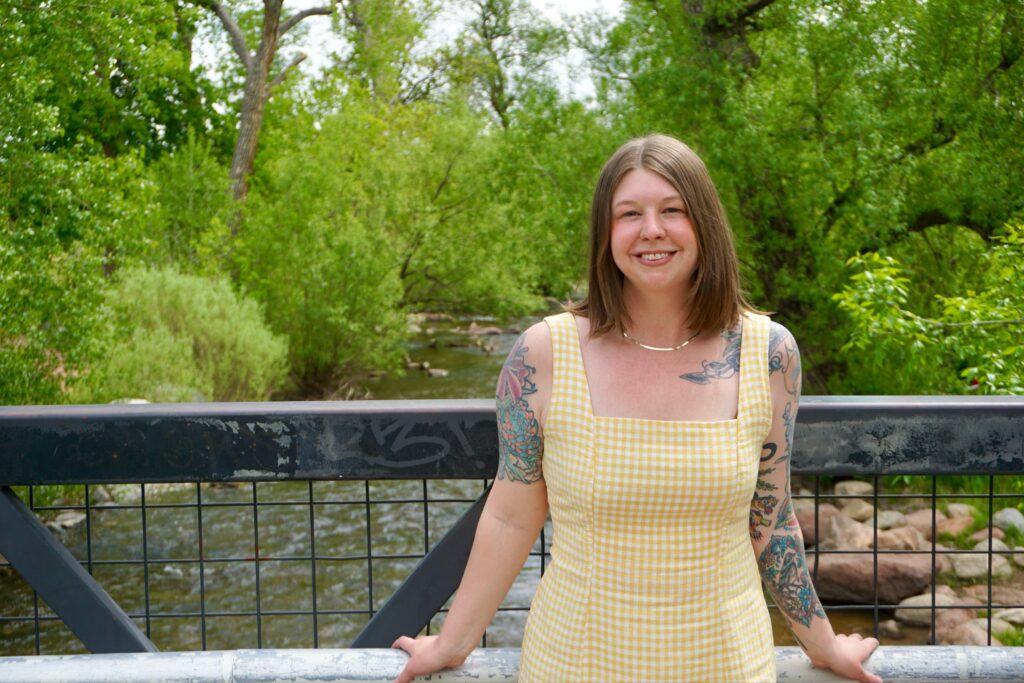
My name is Chelsea, and my background often surprises people. I usually joke that I’ve had a few careers before returning to school in 2018—but each of those chapters helped lead me to where I am today.
After graduating high school in 2009, I joined the U.S. Navy and served as a Master at Arms, working as a base dispatcher and patrolman. After completing my service, I shifted gears and worked as a birth and postpartum doula from 2013 to 2018. Supporting families during that time taught me a lot about empathy, communication, and being present in moments of transition.
During that same period, I experienced a big shift in how I viewed the world and my place in it. I moved from Baltimore, Maryland to Portland, Oregon, and it had a profound impact on my values and future goals. For the first time, I lived in a city where composting and recycling were the norm, biking to work was common, and where public transportation was widely used. Mount Hood in the background served as a daily reminder of the connection between healthy communities and healthy ecosystems. It was in Portland that I started to think more seriously about how our lifestyles interact with the planet—and how we might do things differently. I saw that humans could live and be a part of nature through a system’s approach, instead of treating it as separate.
Between 2018 and 2020, I earned associate degrees in science and arts from Portland Community College, setting the foundation for what would come next.
In 2020, my partner and I moved to Boulder, Colorado for a new job opportunity. I was sad to leave the Pacific Northwest, but excited to land in a place where environmental sustainability and community well-being are front and center. I transferred to CU Boulder in 2021 and completed a B.A. in Environmental Studies. It was there that I really began to focus on environmental equity and access. Currently, I am specializing in Sustainability in the Outdoor Industry in the MENV Graduate Program.
Why I Chose Colorado Water Trust: We know that BIPOC and low-income households are disproportionately impacted by environmental issues, yet they are often excluded from the planning and policy decisions that shape their communities. And while most people agree that everyone should have access to these benefits, it’s not always clear how to communicate that across different communities and values. That’s the challenge that keeps me motivated: figuring out what drives people to care, and how to build bridges between conservation goals and community needs.
When I finished my bachelor’s degree in 2024, I knew I wanted to keep building on that work. The Masters of the Environment (MENV) Graduate Program at CU Boulder gave me that opportunity. Through hands-on, project-based learning, I’ve worked with organizations like the North Central Climate Adaptation Science Center and the Theodore Roosevelt Conservation Partnership. Now, I’m excited to be working with the Colorado Water Trust as part of my capstone project where I can incorporate some of these skills, while also learning new ones.
Through this project, our team is exploring ways to support the Colorado Water Trust’s mission and connect communities across Colorado with healthy, flowing waterways. We are learning about what incentivizes people to participate in conservation whether that be for environmental, economic, and personal reasons. The State of Colorado and other basin states will need to find ways to adapt to growing populations and climate change which leads to water scarcity. I’m grateful for the chance to contribute to this work—and to keep learning from the incredible people involved.
Introducing Gisela Merino-Soler, MENV Graduate Consultant

Hi, my name is Gisela, and I am from Houston, Texas. I Graduated from Texas A&M in 2024 with a degree in Bioenvironmental Science, which established a strong foundation in ecology, resource management, and sustainability. During my undergraduate studies, I found a special interest in how people relate to nature. Specifically, how we shape our environment and, in turn, how it shapes our lives, cultures, and communities. This led me to pursue a graduate degree at CU Boulder in the MENV program. My specialization in the program is Urban Resilience and Sustainability. I was drawn to this program because of its interdisciplinary approach and emphasis on experiential learning.
Why I Chose Colorado Water Trust: The Colorado Water Trust’s project stood out to me because it aligned with my interests in environmental justice, community resilience, and resource management. I chose this project because it felt like a meaningful way to combine environmental science with community engagement and policy. Through this capstone project, I’m hoping to gain a deeper understanding of water rights, flow restoration, and the legal frameworks that influence water management in the West.
After finishing my master’s, I hope to continue working at the intersection of environmental science and community development, ideally in a role where I can support equitable access to natural resources and help build more sustainable, resilient communities. I’m grateful to be part of this project and excited to see where this journey takes me!
Read more about this initiative: Restoring Flows in Urban Colorado: A New Frontier for Colorado Water Trust?