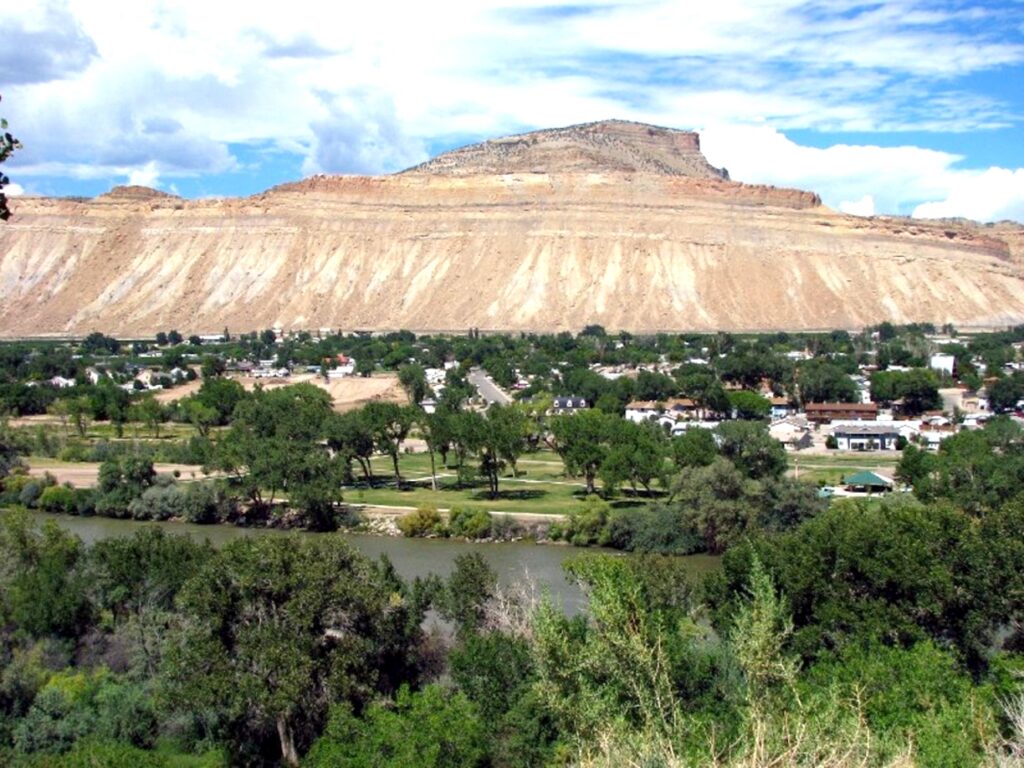
The following post is a final entry written by CU Boulder MENV graduate students chronicling Colorado Water Trust’s partnership with the MENV program to investigate urban streamflow restoration. Earlier posts can be read here, here, and here.
Throughout 2025, we had the opportunity to work with Colorado Water Trust as part of a University of Colorado at Boulder Masters of the Environment (MENV) capstone partnership focused on urban streamflows in Colorado.
These partnerships are designed to give students like us practical real-world experience and the opportunity to apply what we’ve learned in the classroom to help our partner organization think through a complex question. For our partners, the MENV program offers a chance to work with a small group of enthusiastic and curious graduate students who can explore emerging questions and bring additional research capacity to real-world challenges. For us and for Colorado Water Trust staff, this project became a chance to learn from existing research, to listen to people working on the ground, and to participate in ongoing conversations about how Coloradans value the streams that run through their cities and towns.
We came to this project with a general sense of water issues in Colorado, and over the course of this past year, have come to deeply appreciate the layered and interconnected nature of water in Colorado and the important role that urban waterways play across communities. We hope that our contribution to this project helps inform thoughtful and intentional approaches to streamflow restoration in urban settings.
I. Why Urban Streams?
As readers of this blog know well, Colorado Water Trust has a long track record of restoring water to streams and rivers across the state. However, with a few notable exceptions, the majority of this work has occurred primarily in rural or sparsely populated areas. But as Colorado’s cities continue to grow and develop stronger connections to their local streams, urban waterways are becoming increasingly important. Urban streams support fish and wildlife species, serve as shared spaces for recreation and connection to nature, and play a key role in transportation corridors, flood mitigation, and water supply delivery. At the same time, these streams are seeing increased pressure, including development, competing demands, flood risk, and continued water quality concerns.
Recognizing the many factors that shape urban stream management and the various roles these streams have come to play in our lives, Colorado Water Trust came to us with a broad set of questions: what does streamflow restoration look like in urban settings, and how can it reflect what communities actually care about? Colorado Water Trust wants to be in a position to help when cities and other partners begin to contemplate stream and streamflow restoration projects in their communities. To do that, Colorado Water Trust asked us for assistance in developing a clearer understanding of how urban communities relate to their waterways, along with the needs, strengths, challenges, opportunities, and risks that shape how these urban waterways function.
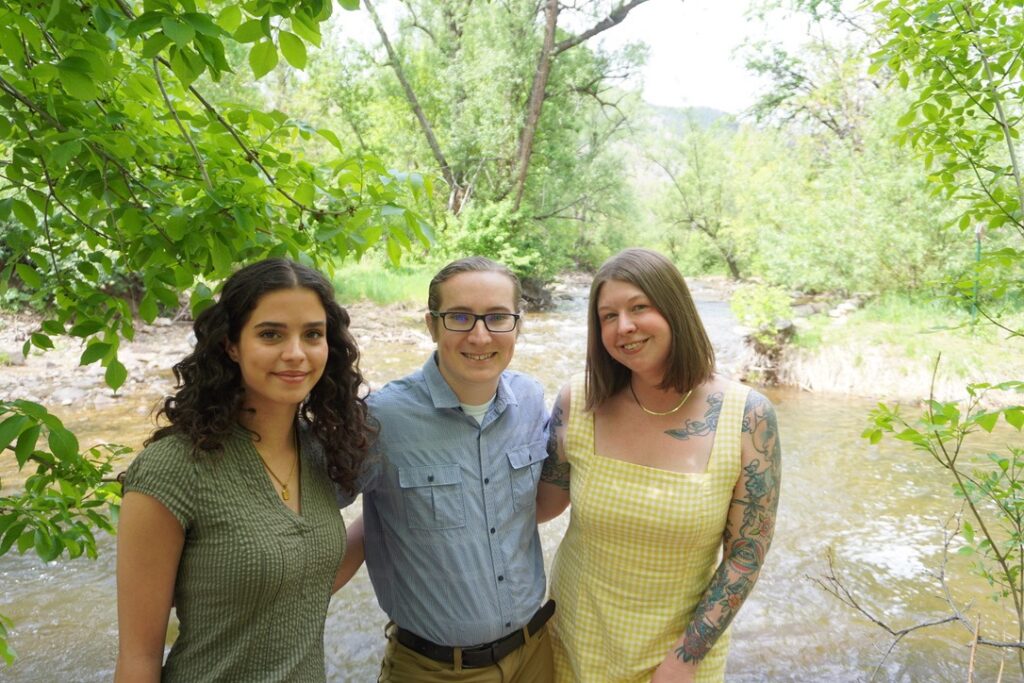
The project was carried out by our three-person MENV graduate consultant team—Caleb Cullen, Chelsea Perts, and Gisela Merino-Soler, supported by their advisor, Meghan McCarroll, PhD —in close collaboration with Colorado Water Trust staff, Josh Boissevain and Andi Bonato Gach. From the outset, this was framed as a learning partnership rather than a one-directional consulting exercise. Our goal was to use a learning, listening, and participating framework to explore values, motivations, and barriers before moving toward potential solutions.
II. Learning: What the Literature Helped Us Understand
What We Explored
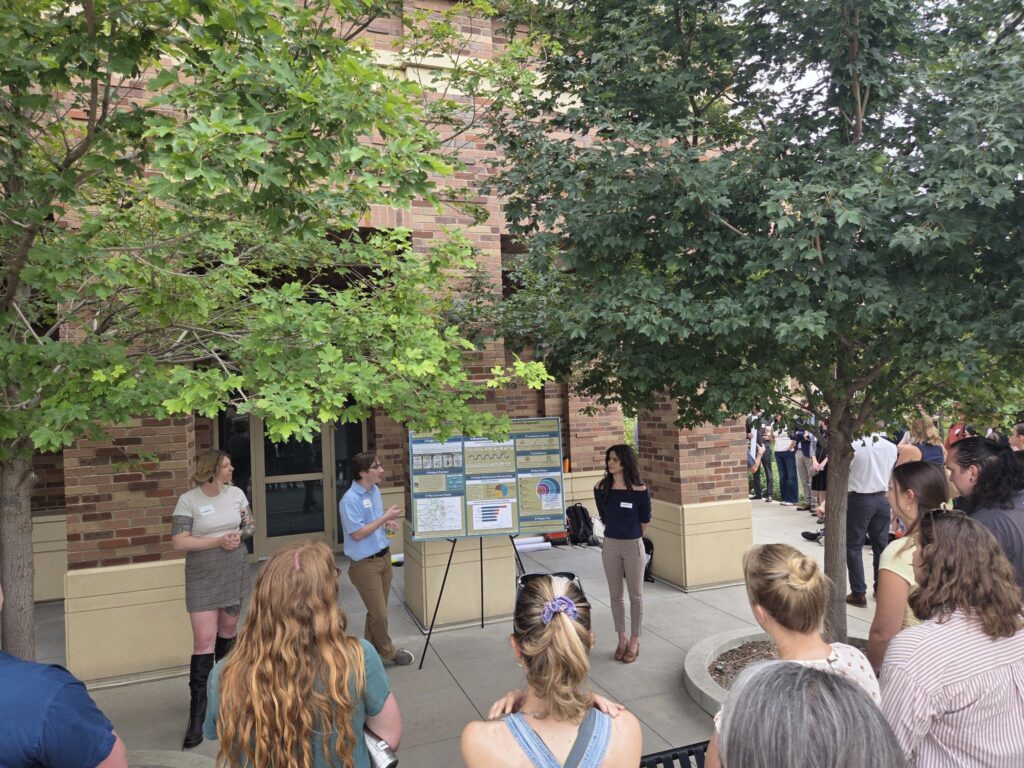
We spent the bulk of spring 2025 grounding ourselves in existing global research, local planning efforts, and news articles related to urban waterways, and also conducted a comprehensive literature review spanning global, national, and Colorado-specific sources to better understand how people think about, relate to, and use urban streams and waterways in their communities. Our goal with this literature review was to create a clear framework for understanding urban water issues more broadly, and then to compare those patterns to what is currently taking place in Colorado.
Core Insights from the Literature
Through our research and analysis, we identified several recurring themes in the literature related to urban streams and rivers, with a strong emphasis on the benefits these systems provide and the barriers that limit restoration efforts. Benefits were commonly framed as the ecological, social, and economic value that urban streams contribute to communities. Barriers, on the other hand, included factors that constrain project initiation or long-term success, such as funding limitations, governance complexity, and competing human uses.
Across the literature, these themes show how our relationship with waterways has changed over time, shifting from primarily agricultural and industrial uses toward a greater recognition of recreational, ecological, and social values. Ecological health consistently emerged as a primary driver of urban stream management, with many sources noting that improvements to overall health often generate broader social and community benefits. Urban streams were also frequently characterized as social spaces, serving as places for recreation, connection, and community identity, rather than solely as ecological or hydraulic systems.
At the same time, literature highlights persistent challenges to achieving these benefits. Successful projects require thoughtful planning, sustained funding, and coordination across multiple stakeholders. Meaningful community engagement is widely acknowledged as a critical component of urban stream management, yet it remains difficult to implement in practice due to competing interests, limited capacity, and uneven access to decision-making processes. Together, these insights underscore the challenge of managing urban streams in ways that balance ecological function with social value, particularly in rapidly growing urban contexts such as those found across Colorado.
Colorado-Specific Observations
Taking a broad approach to our literature review allowed us to situate Colorado’s challenges within a larger conversation about changing human-water relationships, rather than treating them as isolated local issues. At the same time, Colorado’s water system has distinct features that shape how restoration efforts unfold. Work here often operates within the constraints of prior appropriation, interagency coordination, and competing municipal and agricultural demands. Considerations for natural disasters like wildfire and flood mitigation have also been at the forefront of Colorado’s water management strategies as climate change and urban growth increase the severity and frequency of these events.
While the Colorado Water Plan acknowledges these constraints, Colorado continues to strive toward more holistic approaches when planning future water demands. However, this can be challenging, as water management often sits at the intersection of ecological restoration, infrastructure investment, and complex legal and institutional structures.
In our review of Colorado planning documents, we saw variation in how equity and inclusivity were addressed—some plans made intentional efforts to broaden participation, while others relied on more traditional approaches. As the research notes, to implement a whole-system approach, communities who use and live alongside these urban waterways must be part of the process- from initial planning through implementation. Community participation is a key indicator of restoration success, and this highlights the need for a thoughtful and meaningful community engagement. When done well, this creates decision-making processes that foster more equitable and inclusive outcomes.
Ultimately, the literature makes clear that restoring urban streams in Colorado is not just an ecological effort, but one that must account for infrastructure realities, legal frameworks, and the people who live alongside these waterways who actively shape outcomes. Taken together, this early phase of learning reinforced a guiding insight that carried through the rest of the project: successful urban streamflow restoration is as much about people as it is about water.
III. Listening: What We Heard from Practitioners and Communities
To further our understanding of what we saw in the literature and put it in the context of Colorado, we turned our attention to listening more directly to people working with urban waterways in Colorado. This listening took place through informational interviews with water professionals and through a statewide survey.
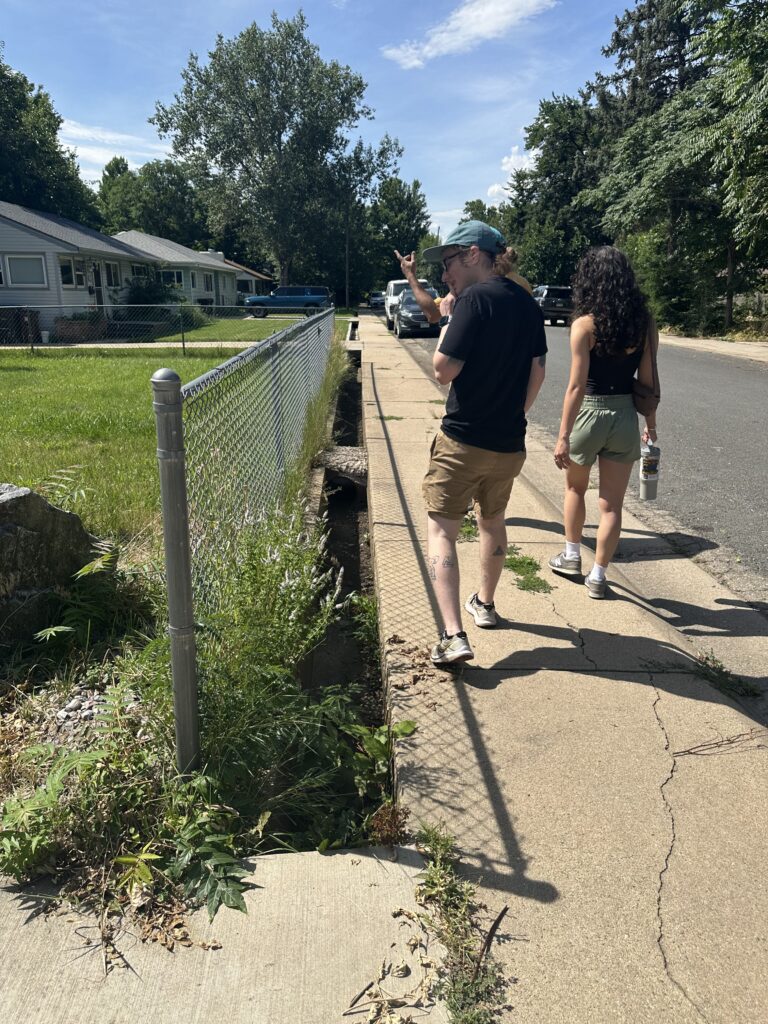
Through informational conversations with water professionals along the Front Range, we gained insight into how urban streams are managed in practice, how water managers balance competing priorities within tight constraints, and how those priorities have shifted over time to reflect changing needs. These conversations highlighted the day-to-day realities of urban water management, including navigating complex water rights systems, responding to safety and infrastructure concerns, and working within limited budgets. They helped us see how flood mitigation strategies can provide additional benefits to Coloradans, including ecological services, recreational amenities, and improved public health. They also gave us insights into how these organizations work to include diverse community voices.
To broaden this listening effort, we then worked with Colorado Water Trust to design and distribute a statewide survey focused on how urban streams are used, valued, and perceived across Colorado. While this survey was open to many stakeholder groups, it was primarily aimed at people working in municipal water management, local government, and stream planning —those with on-the-ground knowledge of Colorado’s water system and the impacts of low flows, especially in urban reaches. We also included questions about ecological and recreational values in relation to urban waterways.
Overall, we received 92 responses from around the state. These responses consistently emphasized the importance of recreation, ecological health, and water quality. Activities like biking, fishing, wildlife watching, and simply spending time near water were repeatedly identified as core benefits of urban streams. Many respondents noted that low flows at certain times of year threaten these benefits, highlighting the direct connection between streamflow and everyday community experience. Financial constraints emerged as a major barrier, and this echoed both the literature and practitioner’s conversations. Survey responses also identified water scarcity as a barrier (whether driven by climate conditions, upstream diversions, or both).
The slideshow below highlights selected survey questions and summarizes key findings through charts, offering a snapshot of how practitioners across Colorado view the benefits and challenges facing urban streams.
Survey Charts by Cacu4164
IV: Participating: Making Sense of What We Learned
As the project moved from learning and listening toward participation, our focus shifted to putting the pieces together into a framework that could be useful for future work.
Community Motivators
One of the most helpful concepts to emerge was that of community motivators, which are the values, needs, and interests that shape how people relate to their local waterways. They are the reasons why someone cares about a river, whether it’s because it protects their neighborhood from flooding, because they enjoy the wildlife it supports, or because it contributes to their city’s economic vitality. Understanding community motivators is useful for urban stream restoration because it helps us look beyond what people want and understand why they care. When we know why different groups value a waterway, we can identify where interests align and where they might come into conflict. This understanding can help build restoration projects that serve multiple community needs at once and anticipate challenges in flow restoration efforts.
Motivator Convergence
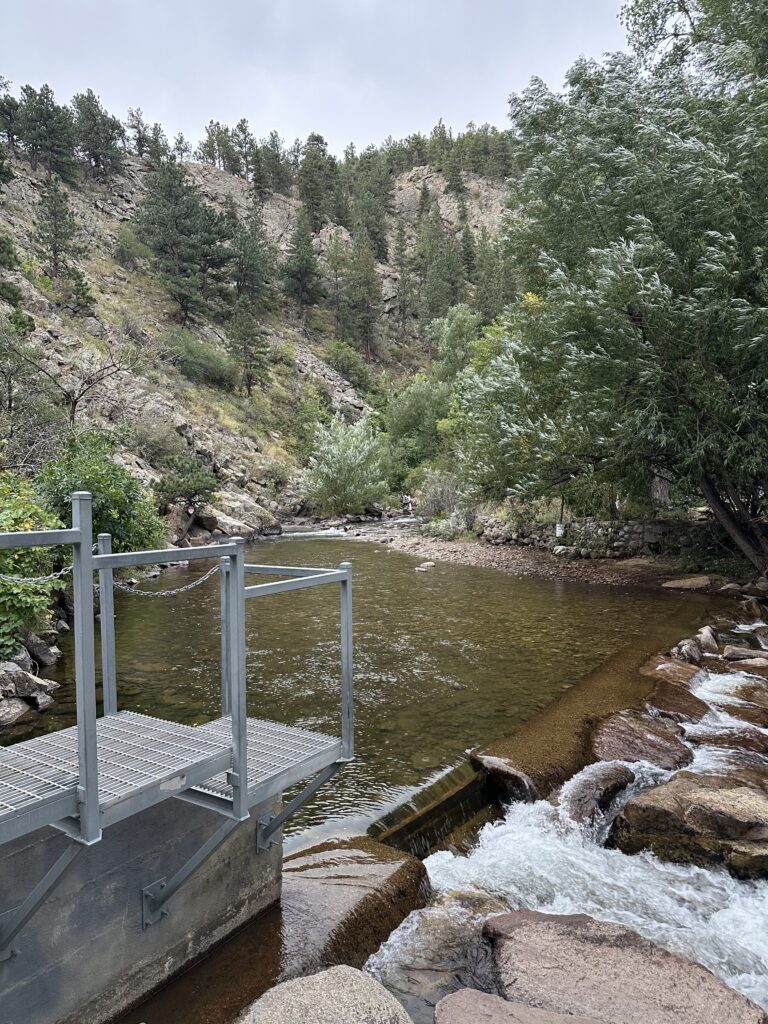
These motivators often overlap, reinforcing shared goals. One clear example of motivator convergence centers around fish and year-round flows. Fish are ecologically important, culturally meaningful, and closely tied to recreation. Fish are an indicator species, meaning their health reflects the overall condition of the stream ecosystem. When stream health improves through adequate year-round flows, fish populations increase. Fish matter to different groups for different reasons, and that’s where motivator convergence comes in. For environmental advocates, healthy fish populations signal good water quality and functioning habitat, and they are proof that the ecosystem is working. For recreation enthusiasts and the tourism industry, stable fish populations are essential for fishing opportunities that draw people to Colorado’s rivers and support local outdoor economies. When restoration efforts are framed around supporting fish through year-round flows, they simultaneously address ecological, recreational, and economic interests. In this way, multiple stakeholders are invested in ensuring enough water flows through the stream to sustain healthy fish populations.
Motivator Divergence
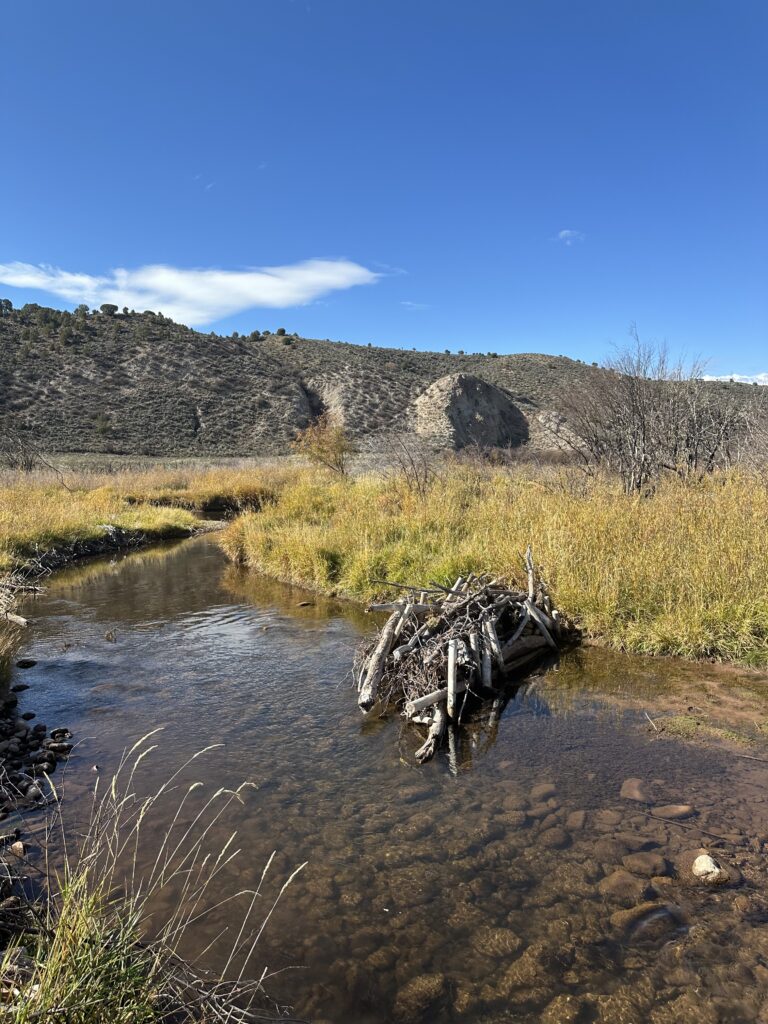
At the same time, motivators can diverge, and recognizing where motivations diverge is just as important as identifying where they converge. Instream diversion structures provide a clear example of motivator divergence. For many agricultural water users, these structures are essential infrastructures that provide reliable irrigation and support the agricultural economy. The ability to divert water when needed is tied to economic viability and historic water rights. However, these same structures can create conflicts with other community interests. From a recreation perspective, diversion structures can be safety hazards, disrupt the aesthetic of a natural stream, and limit certain forms of recreation like kayaking or rafting. For those concerned with ecological health, these structures can prevent fish passage. What serves as one group’s motivator may conflict with other motivators related to safety, recreation, and ecological function. Understanding where motivations diverge can drive projects to explore options like fish-friendly diversions that maintain agricultural water reliability while improving fish passage, or infrastructure modifications that enhance safety and recreation while preserving irrigation capacity.
When we take the time to understand both converging and diverging motivators from the start of a project, we can anticipate where conflict might arise and work to find solutions that serve multiple interests. Understanding motivators help connect groups that might not typically work together, anticipate points of conflict before they derail projects, and design restoration efforts that deliver multiple benefits to diverse stakeholders.
Equity and Access
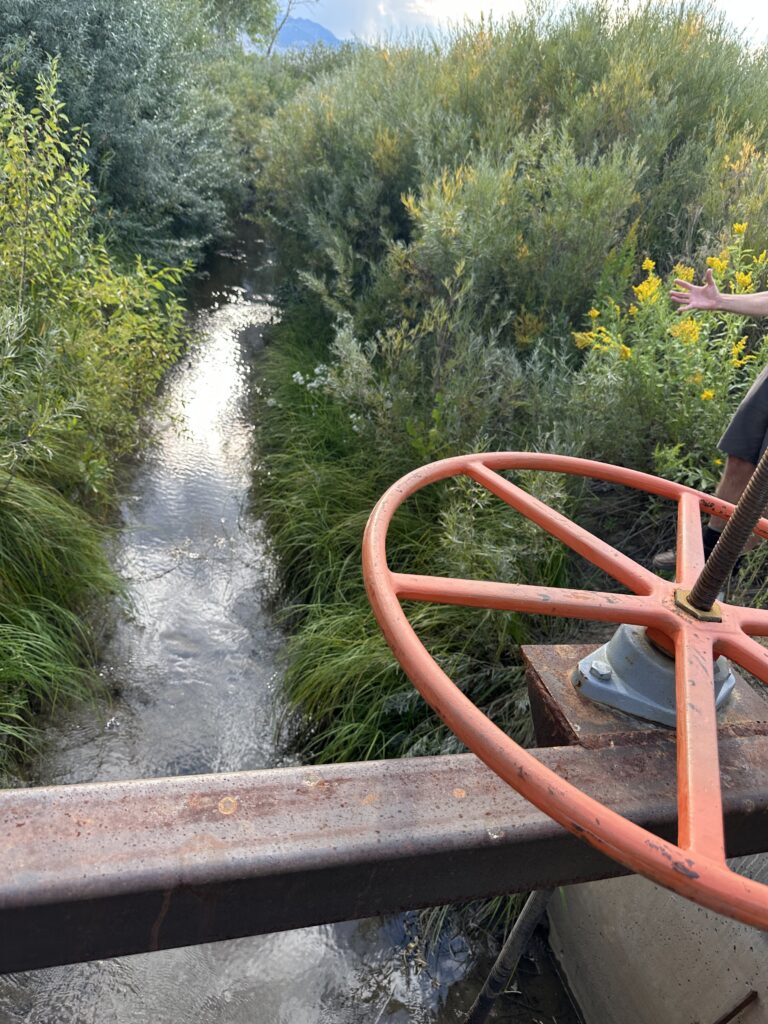
Equity and access were also recurring themes throughout this work. The literature and survey both highlighted how restoration benefits are not always distributed evenly, and how language access, outreach methods, and assumptions about who participates in water planning can influence outcomes. In Colorado, we saw examples of thoughtful engagement—bilingual outreach, accessible formats, and efforts to meet communities where they are—as well as opportunities to build on that work.
For us as students, this phase of participation reinforced an important lesson: technical expertise alone is not enough. Effective urban streamflow restoration requires listening, relationship-building, and a willingness to adapt tools and strategies to local context.
V. Concluding Chapter: What This Year Taught Us
This project has been an incredible learning experience for our team. From learning about how academics are thinking about urban waterways across the globe to seeing what water professionals are doing here in Colorado, the knowledge we’ve gained will support both our future work and that of Colorado Water Trust. Our understanding of the interconnected nature of water in Colorado has grown and evolved throughout this project. We now recognize that urban streams are far more complex, ecological, and socially than how they appear on the surface.
This project was not intended to prescribe specific projects or solutions for Colorado Water Trust. Instead, it focused on building a framework of global and local knowledge—synthesizing research and elevating voices from across the state to inform future conversations about urban streamflow restoration.
We truly believe the learning, listening, and participating process is essential to this work. It allows us to develop an authentic understanding of the language, constraints, and challenges that shape a project and influence its outcomes. We hope that Colorado Water Trust takes what we have learned and uses it to guide their approach to urban streams, creating projects that not only serve the ecological needs of the stream, but also the communities that surround and depend on those water ways.
This post marks the conclusion of this phase of the Urban Flows project, but not the end of the conversation. We hope the insights we uncovered help Colorado Water Trust and others approach urban streams with broader understanding as new restoration opportunities emerge across the state. These urban waterways are not just infrastructure, but living systems woven into the communities through which they flow. How we care for them ultimately reflects how we care for the communities around them.
A Word from the Authors
 Gisela Merino-Soler
I came into this work passionate about environmental justice and resource management, and this project has shown me what that actually looks like in practice. I have learned that equitable planning requires intentionality at every step, from how we gather community input to whose knowledge we prioritize to how we measure success. When we take time to understand why different groups care about their waterways, we create opportunities for inclusive decision making that honors all voices, not just the most powerful ones. As I move forward in my career, I want to work in sustainable development, supporting communities and ensuring that access to waterways and green spaces isn’t determined by zip code or income level. I’m excited to carry these lessons into work that builds more sustainable and resilient communities. If you’re working on projects centered on equity and sustainability, I’d love to connect. I’m always eager to learn, collaborate, and contribute to meaningful change.
 Chelsea Perts
Through the course of this project, I am most impressed with the sheer amount of creativity the State of Colorado and its residents are enacting to be more strategic in how water is managed. From residents using ditch water to irrigate their home gardens, water providers and engineers who are increasing efficiency and modernizing infrastructure, and policy and legislation which uses ecological and recreational values to protect our streams, there is clear movement on rethinking how water systems can serve both people and place. Water management must be adaptative, collaborative, and centered around community values. Processes that support this will continue to be crucial as we plan for future water needs in not just Colorado, but around the world.
 Caleb Cullen
This project has been one of the most rewarding and eye-opening experiences of my life. I sincerely enjoyed all the opportunities to engage with the water world in Colorado. From presenting at the Metro and South Platte Basin Roundtables to going to the Watershed Summit, I would not have been able to interact with the water world without this project. The entire process has shown me how intricate and complex the water system is in Colorado. These intricacies and complexities can help us create a water future that serves all users and needs. It has become clear that an integrated and holistic system is needed to ensure that as our climate changes, we create a system that can withstand the challenges ahead.